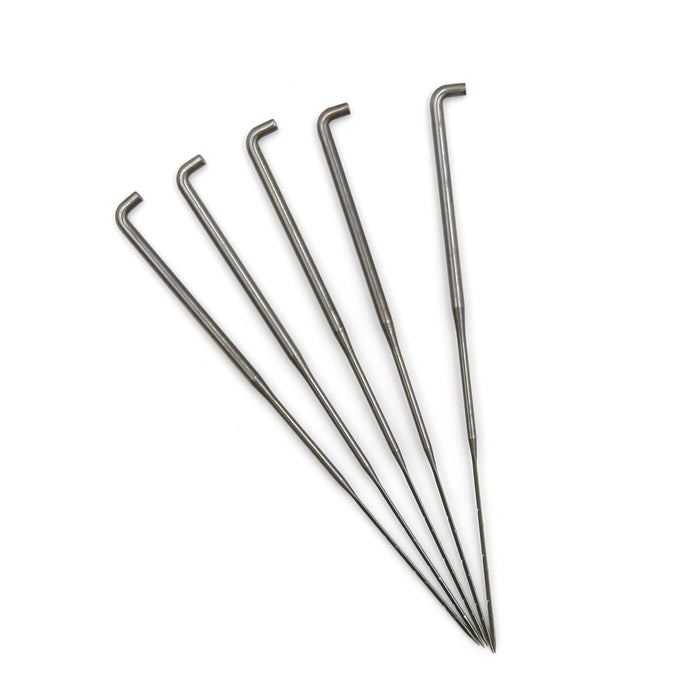
Felting needles come in a wide range of styles! Varying in length, shaft design, number and type of barbs, and point shape. At first, this variety may feel overwhelming, but it doesn’t have to be. It helps to remember that these needles were originally designed for large, high-speed industrial machines that produce many different products. Over time, artists and crafters adapted them for hand use. Along with that, the technical terminology made its way into the craft world, which can sometimes be confusing.
To make things easier, we’ve provided a simplified overview of the needles we offer.
How do felting needles work?
Each needle has tiny barbs that grab and tangle the fibers as you push it into your project, binding them together into solid felt. Needles with more barbs felt faster, making the process more efficient.
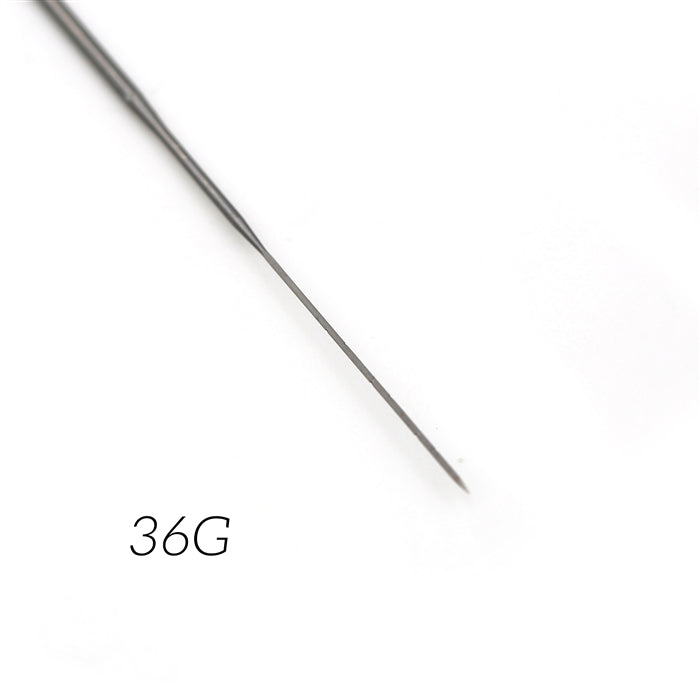
36 Gauge – A coarse needle that works well for fast felting and joining pieces together. However, it’s not ideal for finishing touches or fine details.
38 Gauge – A versatile, medium-gauge needle suitable for general use. It can handle bulk felting as well as some detail work, making it great for sculpting, though it’s not typically used as a finishing needle.
40 Gauge – A fine needle designed for detail work and creating smooth finishes. Because it has fewer barbs, it’s not the best choice for coarse fibers.